
At a Glance
- US President Donald Trump files a $5 billion lawsuit against JPMorgan, alleging the bank closed his accounts without warning.
- The complaint accuses JPMorgan of trade libel, breach of implied covenant of good faith, and CEO Jamie Dimon of violating Florida’s deceptive trade practices law.
- The case follows Trump’s social-media threat to sue the bank after his supporters’ Jan 6, 2021 attack on the U.S. Capitol.
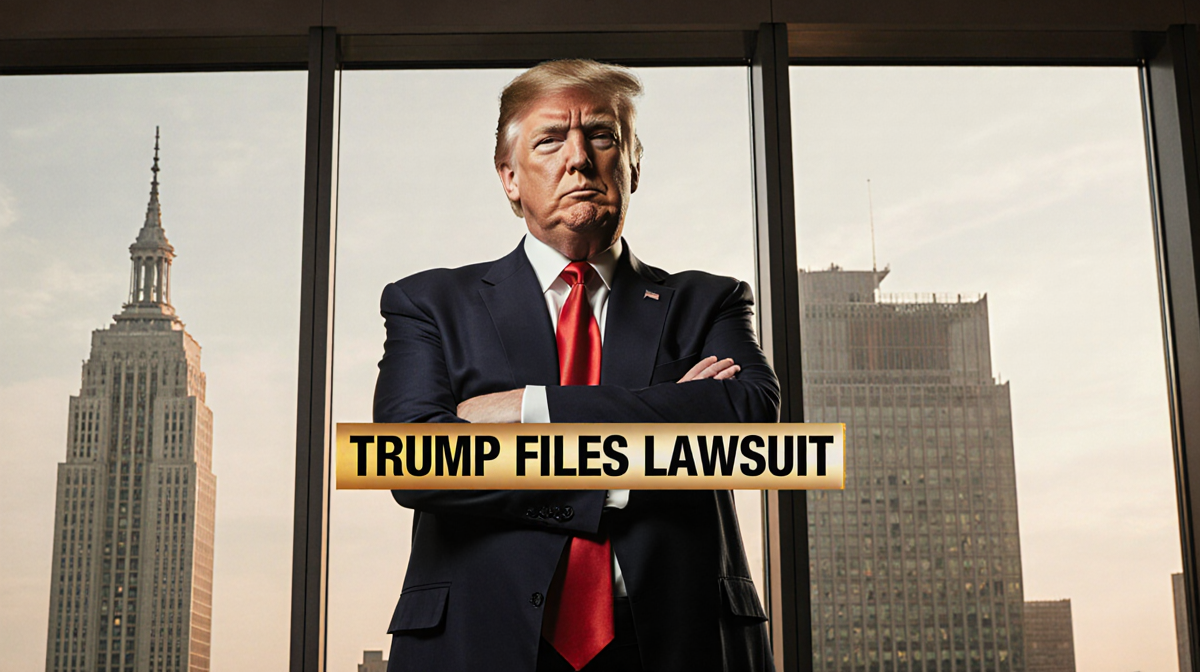
In a move that has drawn attention from both political and financial circles, US President Donald Trump has filed a lawsuit in Miami-Dade County court against JPMorgan Chase & Co. The complaint seeks $5 billion in damages, alleging that the bank closed accounts linked to Trump and his businesses without warning or provocation. The suit comes after Trump threatened to sue the bank weeks after his supporters attacked the U.S. Capitol in 2021.
Trump Files Lawsuit Against JPMorgan
The lawsuit was filed days after Trump posted a threat on social media to sue the banking giant for debanking him. He cited the bank’s decision to close accounts associated with his name and his businesses as the basis for his claim. The complaint was lodged in the Miami-Dade County state court, but it was not yet available on the court’s public docket at the time of reporting.
Allegations and Legal Claims
Trump’s complaint details several legal accusations:
- Trade libel: The bank allegedly defamed Trump by closing his accounts.
- Breach of implied covenant of good faith: The bank is said to have acted in bad faith when terminating accounts.
- Violation of Florida’s deceptive trade practices law: CEO Jamie Dimon is alleged to have engaged in deceptive conduct.
The lawsuit specifically targets the bank’s alleged failure to provide warning or provocation before the account closures. Trump’s claim centers on the notion that the bank acted to silence political dissent.
Bank’s Response
A spokesperson for JPMorgan dismissed the lawsuit as lacking merit. The spokesperson said the lawsuit had no merit and that JPMorgan “does not close accounts for political or religious reasons.” The bank’s statement emphasized that account closures are based on policy compliance, not political pressure.
In a separate statement, CEO Jamie Dimon addressed prior allegations of politically motivated debanking. He said: “we debank people who are Democrats. We debank people who are Republicans. We have debanked different religious folks. Never was that for that reason.” Dimon’s remarks were aimed at countering claims that the bank’s actions were ideologically driven.
Political Context and Background
Trump’s social-media post on January 17 threatened a lawsuit against JPMorgan after his supporters attacked the U.S. Capitol on Jan 6, 2021. He claimed the 2020 election was rigged and that the attack was a “correct” action. Trump lost the election by 74 electoral votes to former President Joe Biden.
In August, Trump signed an executive order targeting “politicized or unlawful debanking.” The order instructed U.S. regulators to investigate claims and develop measures to prevent future debanking. The executive order reflects the administration’s broader concern over banking restrictions on political and religious groups.
Broader Implications for Crypto and Debanking
The lawsuit is part of a larger trend of scrutiny over debanking practices. Republican lawmakers in Congress have called for a market-structure bill to address the issue. The bill is currently under consideration in the Senate.
The crypto industry has labeled the debanking allegations “Operation Chokepoint 2.0,” suggesting an orchestrated effort by the U.S. government to remove traditional banking access for digital-asset participants. Over 30 tech and crypto executives have gone public with their own debanking claims, adding momentum to the movement.
The case highlights the intersection of politics, banking, and emerging financial technologies. It underscores the growing debate over whether banks can refuse service based on political affiliation or religious beliefs.
Key Takeaways
- Trump’s lawsuit seeks $5 billion in damages, alleging JPMorgan closed his accounts without warning.
- The complaint accuses the bank of trade libel, breach of good faith, and deceptive trade practices.
- JPMorgan’s spokesperson denied political motives, while CEO Jamie Dimon reiterated that account closures are not based on ideology.
- The lawsuit follows Trump’s social-media threat after the Jan 6, 2021 Capitol attack and his claims of a rigged election.
- The case is part of a broader push by Republicans and the crypto community to challenge perceived political debanking.
- The outcome may influence future banking policies toward politically or religiously affiliated clients.
The lawsuit’s progression will be closely watched by both political observers and financial regulators, as it could set a precedent for how banks handle politically sensitive accounts.
This article is produced in accordance with {brand}’s Editorial Policy and aims to provide accurate and timely information.
About the Author